Counting Calories: A Practical Guide for Beginners
Created Updated
 By Oleksandr YashchukFounder & Product Owner at TrackAI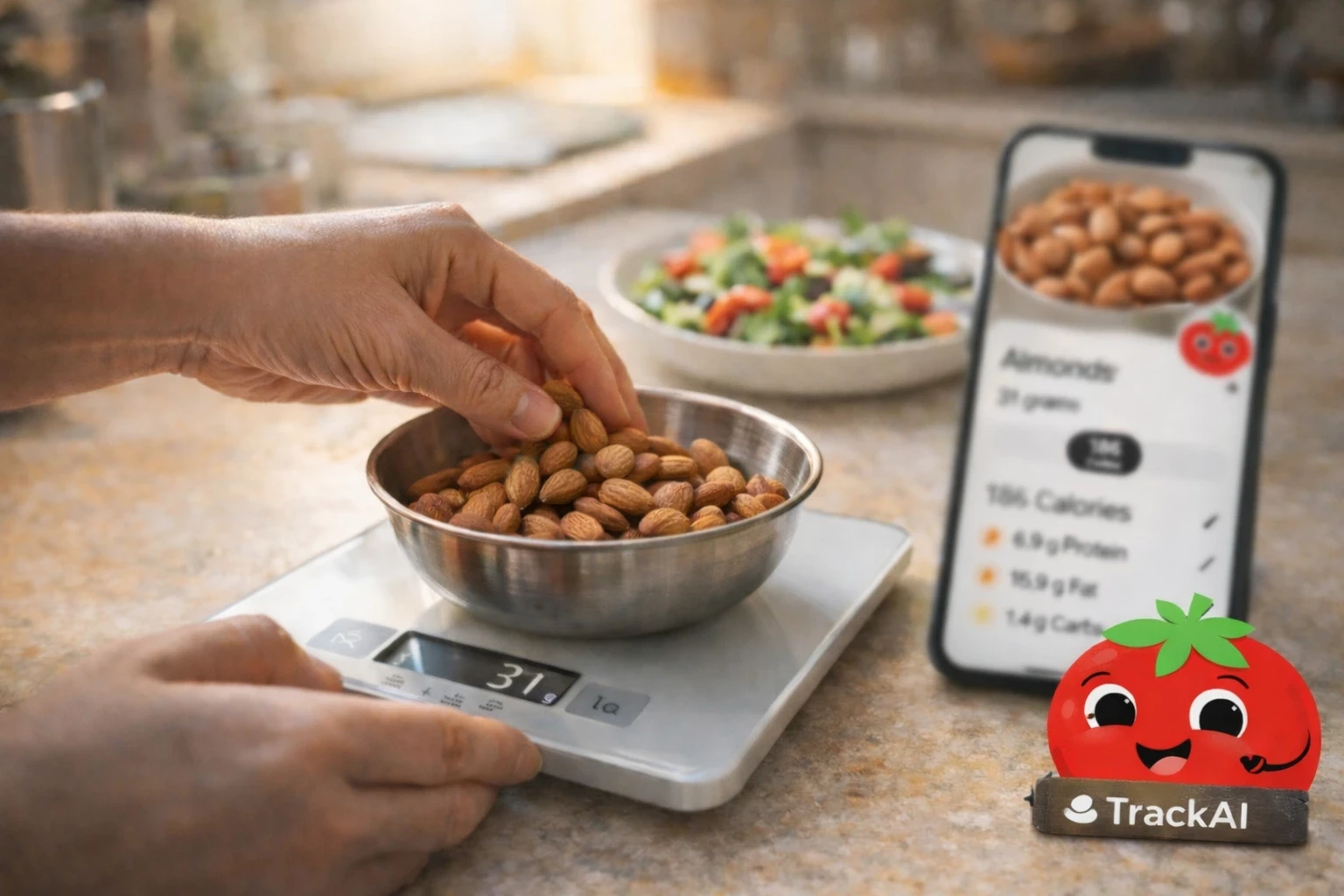
How to Count Calories: A Step-by-Step Guide for Beginners
Nutrition provides energy to the body and supports it every day. Everything we consume has a certain calorie content, and it is this indicator that determines our well-being, appearance, and performance.
For many, counting calories seems complicated and exhausting. However, in reality, this is the only reliable way to lose weight, maintain weight, or gain weight. Even if you don't follow a strict diet, understanding the balance of your diet allows you to move toward mindful eating.
This article will help you thoroughly understand how to count calories – from calculating your individual norm and understanding the calorie content of different foods to creating a balanced plan to achieve your goals. You will learn how to calculate your calories without extra hassle and make the process easy and effective.
Why Count Calories: Balance for Weight Loss, Maintenance, or Gaining Weight
Controlling the calorie content of food is not just about numbers in an app, but about understanding your body. Our body spends a certain amount of energy every day for breathing, movement, digestion, and all other processes. If we consume more calories than we expend, weight gradually increases. If we consume less, the body uses its reserves, leading to weight loss.
Counting calories helps:
• better understand what makes up your daily diet and how it affects your digestive system;
• notice which foods give energy and which cause fatigue or overeating;
• learn to intuitively determine portions without strict restrictions;
• see the real picture of your diet, not rely on feelings or myths;
• create a healthy habit that helps with weight loss, maintenance, or muscle mass gain;
• form a more mindful approach to food without prohibitions.
To maintain stable weight, it is important to understand how energy balance works in the body. When you know how to count calories and control their level, it becomes easier to influence not only body mass but also well-being, productivity, and mood.
How to Calculate the Number of Calories for Your Diet
First, it's important to understand how to learn to count calories for your diet, as the energy norm your body needs depends not only on food but also on individual parameters.
Start with simple steps:
1. Define your goal.
• For weight loss, create a moderate calorie deficit (about 10–20%).
• For weight maintenance, consume calories at the level that matches energy expenditure.
• To gain muscle or weight, increase calorie intake by 10–15%.
2. Consider sex and age.
Men typically have a higher metabolism rate than women. As you age, metabolism slows down, so calorie needs gradually decrease.
3. Evaluate activity level.
A person who walks a lot or trains regularly spends much more energy than an office worker with a sedentary lifestyle.
International diet and medical organizations have determined the average calorie needs for different categories of people, which can be used as quick guidelines.
- Women 18–30 years: ~1800–2400 kcal;
- Women 31–50 years: ~1700–2200 kcal;
- Men 18–30 years: ~2200–3000 kcal;
- Men 31–50 years: ~2000–2900 kcal
However, these are just approximate numbers, and for a precise calculation, a formula such as Mifflin-St Jeor is used. More details on how to calculate your daily calorie needs and consider all nuances can be found in our article.
How Calorie Counting Changes Depending on Activity
To understand how to accurately count calories for yourself, it's important to consider not only weight, height, and age, but also activity level and even metabolism speed. If you have determined your calorie norm but haven't taken into account how much you actually move, the result may be inaccurate. This is why a special coefficient is used in the calculations that reflects your lifestyle – from sedentary to very active.
Physical activity significantly affects energy needs. A person who spends most of their time at a computer burns much fewer calories than someone who trains or has a job involving physical work. If you walk a lot during the day, exercise, or just don't sit still – your body needs more energy for recovery.
For example, a person weighing around 70 kg may need between 2000 and 2400 kcal per day with a medium activity level. If the goal is weight loss, creating a moderate deficit is enough without drastically reducing calories. For muscle gain, on the contrary, a slight increase in intake is needed.
How to Count Calories in Food: Simple Methods for Balanced Nutrition
Nutrition should be varied and balanced. So the question of how to count calories in foods is not limited to just the overall energy value. It is also essential to pay attention to the ratio of proteins, fats, and carbohydrates (PFC) – this determines how complete your diet will be.
Start by checking labels: they usually show the energy value per 100 grams of the product. If there is no labeling on the packaging, special online tables or mobile apps such as TrackAI can help. Artificial intelligence instantly determines the number of calories and PFC in a dish with just one photo.
Regardless of the chosen method, portion measurement accuracy remains a key condition for success. To avoid mistakes:
• weigh raw products if the calorie content is given for the raw form;
• use a kitchen scale with an accuracy of up to 1 g;
• if you cook a complex dish, weigh each ingredient.
How to Find the Caloric Content of Products and Ready Meals
Most of us do not eat 100 g of buckwheat or chicken fillet without any processing. Therefore, it is important to understand how to count calories in food when it comes to a ready dish.
During cooking, products change not only in taste but also in weight and calorie content. Some water evaporates, and fats or oils, on the contrary, add energy. For example, if you fry 100 g of chicken in a tablespoon of oil (approximately 10 ml), you need to add about 90 kcal to the total calorie content. Similarly, sauces, butter, seasonings with sugar or honey – all these affect the final number.
To calculate the energy value of a ready dish, add the calories of all ingredients before cooking, and then divide this total by the weight of the finished food. This way, you will see how many calories are in 100 grams. Remember: during boiling or frying, products lose water, so the ready dish becomes smaller, and the nutritional value per serving becomes higher. You can skip counting herbs and spices as they almost do not affect the total number, but oil and sauces should definitely be considered.
How to Simplify Calorie Counting in Your Daily Menu
Many people stop counting calories in dishes simply because it seems too complicated. In fact, the process can be made quick and even fun. Here are a few convenient how to properly count calories without fanaticism or stress:
• Mobile app TrackAI. Just take a photo of the dish, and within seconds, the app will recognize the products and show their calorie content and PFC.
• Menu templates. If you often cook the same dishes, save them as templates – this makes calculations much easier. Just select the desired option and adjust the amount of ingredients.
• Ready-made food databases. Online resources and apps have large databases with already calculated calorie content for thousands of products. This saves a lot of time and effort.
Do not treat calorie counting as a restriction. It is just a tool that helps you understand your diet better. A flexible approach and small daily adjustments will give better results than strict control.
Summary: How to Correctly Account for Calories for Effective Weight Loss or Weight Gain
The main thing in counting is not strict math, but understanding the process. To maintain the desired shape, it is important to know how to calculate calories correctly, but even more important is to do this in a way that benefits you. The balance between energy intake and expenditure helps not only with weight loss or gain but also with better body awareness.
Regular meals, attention to portions, and quality products give stable results without exhaustion. Calorie control is a way to take care of health, energy, and internal comfort. Over time, you will begin to intuitively understand your balance and consciously choose food without constant counting.
FAQ
How do I know my calorie norm?
To determine your calorie norm, you need to calculate your daily energy expenditure. It depends on your sex, age, height, current body weight, and activity level. Reliable mobile apps, such as TrackAI, automatically perform this calculation.
Where to start if I have never counted calories?
Start by determining your target calorie number. Download a mobile app and for the first week, simply track your usual diet without changing it. This will help you understand how many calories you are actually consuming. If your goal is weight loss, gradually create a deficit, and to gain weight – increase calorie intake.
Do I need to count PFC (proteins, fats, carbohydrates)?
Yes, this is desirable. Calorie content gives a general idea of energy, but the ratio of macronutrients affects the result. For example, adequate protein helps maintain muscles during weight loss, while fiber-rich carbs and moderate fat help nourish the body with energy and support digestion.